


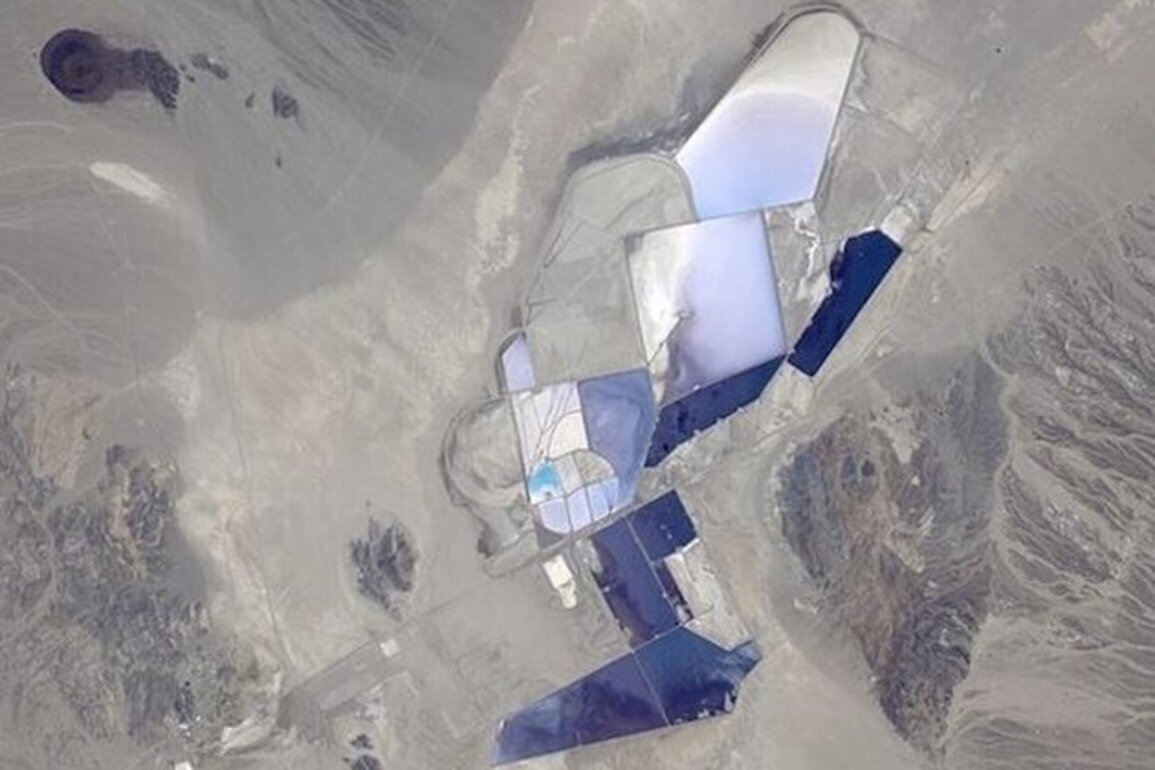
Three lithium mines in Nevada, two of them Canadian-owned, violate Indigenous rights and international law, according to Amnesty International research published May 12.
The report investigates three mines: Thacker Pass (being developed by a U.S. subsidiary of Canadian company Lithium Americas Corp. and General Motors), Nevada North (being developed by Canadian company Surge Battery Metals Inc. with an Australian partner), and Rhyolite Ridge LithiumBoron Project (being developed by Australian company Ioneer Ltd.). The first is currently under construction, while the other two are still in exploratory phases.
Amnesty investigators found that the owners never consulted with or gained Free, Prior, and Informed Consent (FPIC) from the Indigenous communities on whose traditional territories the mines are located. FPIC is required under the UN Declaration of the Rights of Indigenous Peoples (UNDRIP), which both the U.S. and Canada have committed to but have not enshrined in federal law.
"We can't have an energy transition that continues to sacrifice people, that continues to perpetuate environmental racism, where Indigenous people pay the price," said Amnesty International researcher and campaigner Tara Scurr.
Lithium is an essential ingredient for the lithium-ion batteries that power renewable electrification and, increasingly, artificial intelligence (AI) data centres. Nevada holds 85% of known U.S. lithium reserves. And an estimated 79% of all known U.S. lithium reserves lie within 35 miles of Tribal reservations, in sensitive desert ecosystems with high vulnerability to groundwater depletion and contamination.
More than 20,000 lithium mining claims have been filed in Nevada. Federal governments in both the U.S. and Canada are signalling a turn to expedite and deregulate mining projects to boost domestic energy capacity.
And now, Indigenous groups in Nevada are part of a global groundswell of opposition to critical minerals mining and energy development on culturally significant and environmentally vulnerable Indigenous territories, termed "green colonialism."
"The mine is going to destroy our homelands, our way of living. I honestly don't feel our Tribe's ready for what's to come," said Shelley Harjo, member of the Fort McDermitt Paiute and Shoshone Tribe and former Tribal Council member, who was interviewed by Amnesty International. The Thacker Pass mine will have an impact on her Tribe's traditional lands.
Civil society in Canada has fought for decades to hold Canadian mining companies accountable for international human rights violations. Canada accounts for approximately 75% of global mining financing, and more than half of Canadian mining and exploration companies operate overseas, according to a Mining Watch Canada brief submitted to the House of Commons Standing Committee on International Trade in 2023.
"The kind of corporate impunity that we're seeing, that's always been a feature of the Canadian mining industry, both domestically and internationally," said Mining Watch National Program Co-Lead Jamie Kneen in a telephone interview with The Energy Mix.
Kneen and Scurr both cited numerous lawsuits against Canadian mining companies for human rights abuses, environmental damages, and deaths in projects abroad, including cases in Eritrea and Guatemala. "There have been a number of civil lawsuits over the years for damages caused by these mines," Scurr told The Mix.
Mining Watch enumerated killings and injuries, sexual assaults by mine security and police guarding mines, forced evictions, threats to human and environmental rights defenders, forced labour, and environmental harms in a presentation [pdf] to the House Committee on International Trade in 2023.
"Harm caused or contributed to by Canadian mining companies, their subsidiaries and contractors overseas is widespread globally and persistent," the brief stated. "It includes environmental degradation that will persist for hundreds of years, a wide range of human rights harms, abuses of Indigenous rights, as well as negative economic and financial impacts at local and national levels. Together, these impacts have serious and long-term repercussions on local and national development."
The Amnesty International report recommends that home states of mining companies, such as Canada and Australia, legislate and enforce standards for human rights and environmental due diligence that include respect for Indigenous rights and FPIC.
Canada created a mechanism to hold mining companies accountable, said Kneen, but never gave it enforcement power or staff. The federal government established the Office of the Canadian Ombudsperson for Responsible Enterprise (CORE) to investigate corporate ethical violations in 2018.
However, CORE never had the power to subpoena information from mining companies, hamstringing its capacity to investigate or prosecute, said Kneen. The office of Ombudsperson has been vacant for over a year.
"It's deplorable that Canada broke the promises that it made around the CORE," said Scurr of Amnesty International.
"It's really a shadow of what it was promised to be, and it's not good enough."
Source: The Energy Mix